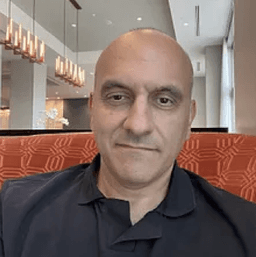
You can read more and follow David Bethoney’s newsletter at The Revive.
The funding rounds get celebrated. The 3am decisions, the brutal board meetings, the near-death moments are the parts nobody sees.
Founding a company is an endeavor most people have an opinion about from the outside. It looks collaborative. It looks like a group of people building something together. I think this is an incomplete view of what really goes on.
I’ve now worked for three venture capital funded startups over the last 10 years, including one that I am currently working with on a fractional basis. All three of these companies have been funded by top-tier venture capital firms in either Silicon Valley and/or New York City. I’ve been in hundreds of board meetings, involved in dozens of fundraising cycles, with lots of hard-won wins and amazing growth stories, and MANY near-death moments across all three.
Here’s what I’m reflecting on: I’ve had the absolute privilege of watching founders operate up close in ways most people in their orbit never get to see. And what I keep thinking about is that everyone around a founder has a stake in the outcome. Almost nobody has a stake in the founder.
Everyone Has a Stake. Nobody Has the Same One.
When a startup begins its ascent, it looks like a collective effort. There’s a team. There are investors. There’s a board. There are customers. Everyone is supposed to be rowing in the same direction. And oftentimes, this is what most people looking from the outside in actually see.
But here’s what I actually saw across three companies: everyone in the company’s orbit has their own angle. This is simply a function of human nature, not an accusation. The investor is protecting their capital. They have a portfolio and their own investors to answer to. When things get difficult, when a quarter goes sideways, or the growth curve flattens, the calculus changes fast. Very fast. Founders who thought they had believers in their corner rapidly discover that belief has conditions. I’ve watched investors who were initially enthusiastic and celebratory turn cold the moment the narrative got complicated. This doesn’t make them bad people; It makes them people protecting their own interests, which were never perfectly aligned with the founder’s to begin with.
Employees have their own version of this. Employees want stability and growth. They want the founder to have the answers. They show up with expectations about compensation, direction, and what the company will become. They hold the founder accountable to those expectations in ways that can feel relentless. What employees often don’t see is the mathematical gymnastics the founder did to make payroll last month, or what conversation happened in the board meeting before the all-hands, or what decision got made between midnight and 3:00 am. I’ve often been the recipient of a lot of this midnight to 3 am thinking.
The board is its own category entirely. Boards can be incredibly valuable. They can also be emotionally exhausting for a founder to navigate. A board of directors is a room full of people with strong opinions, consequential power, and varying degrees of operational understanding. The founder has to manage board members, perform for them, and absorb their anxiety, while also running the company. I’ve been in rooms where a founder walked out of a brutal board meeting and went straight into a conversation with a customer as if nothing happened, a level of compartmentalization that defies human capacity.
And yet, gravity keeps everything in orbit. The investors send the follow-up email. The employees slack with their concerns. The board schedules the next check-in. Life moves forward, and the founder moves.
In the nascent days of a company, there’s a period that is romanticized in retrospect and dismissed in the moment.
The early days of building something are defined almost entirely by people telling you it won’t work. Not always directly. Sometimes it’s the investor who takes the meeting and then ghosts (you would be surprised how often this happens) or it’s the person in your life who asks, with genuine concern, whether you’ve thought about a backup plan. Sometimes it’s the market itself, indifferent to how hard you worked on the pitch or how good the product is.
Founders endure rejection at a volume and frequency that most people in a traditional career track never encounter. A salesperson gets rejected. A job applicant gets rejected. But a founder gets rejected on the thing they built hundreds of times, the idea they staked their identity and livelihood on. Most of the time draining any amount of savings they had for their future. They hook their business up to their body, keeping it alive like an IV keeps a hospital patient alive.
If you’re a female founder, this pressure is compounded by a system that still isn’t set up for you. Female founding teams received just 2.3% of global venture capital in 2024. That number has barely moved in three decades.
The Decisions Nobody Sees
The decisions that matter most aren’t the ones that get announced.
The ones that matter are made without enough information and under time pressure. Which group of employees do you let go when you can’t make payroll work? Do you take the term sheet from the investor whose terms aren’t great because the alternative is running out of runway? Do you pivot the product when your best customers are telling you one thing and your instincts are telling you another? Do you tell the team the truth about how close to the edge you actually are?
These aren’t hypothetical scenarios. I’ve watched founders navigate every one of them. And what strikes me every time is how little fanfare surrounds the moment when a founder makes the right call. There’s no announcement. There’s no acknowledgment. The founder makes the call, lives with it, and moves on to the next one.
The Start-up Founders Nobody Writes About
The startup world continues to have a celebrity problem. The founders who get the attention and the press are the ones who built behemoths. Eight and nine-figure fund raises. That’s the story that gets told over and over.
Which means there’s an entire population of founders who built something real and did it without ever landing in that conversation. They built a company to a few million in revenue. Maybe they sold it for a modest outcome. Maybe they’re still running it. Maybe it didn’t make it as most startups fail.
Those founders are some of the most underrated people I’ve ever been around. I’ve watched them get treated as afterthoughts by investors who wanted a bigger return. I’ve watched their employees move on without fully reckoning with what it took to build the place they just left. What they did was extraordinary. Not in spite of the outcome. Regardless of it.
If this reads like a love letter to founders, well….it is. Not because founding is glamorous but because I’ve watched what it actually takes up close now three times. Building without a guarantee and without anyone genuinely having a stake in you. I don’t have a better word for that than extraordinary.
Thanks for reading!
Dave