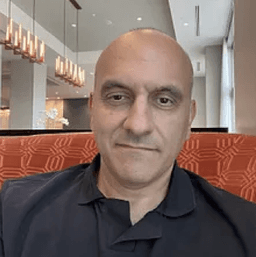
You can read more and follow David Bethoney’s newsletter at The Revive.
How do you find what actually matters when nothing can wait? And how do you let other fires burn while you focus on the most important problem?
We’ve all said it, and we’ve all heard it said, many times in our careers.
Everything is a priority. Everything is on fire at once.
So what do you do? Most of us do some version of the same thing: we stay busy and feel productive. And somehow, at the end of the day, the actual problems are exactly where we left them. I am guilty of this more than I want to admit.
I’ve come to realize the problem usually isn’t that we don’t know what matters. Deep down, most of us already know. The problem is that acting on it requires something harder than knowledge. It requires the nerve to let some fires burn. It’s an extremely uncomfortable feeling to tolerate fires burning, so…let’s talk about this.
Why Your Brain Is Working Against You
Tolerating chaos is hard. Research on decision-making under stress consistently shows that when we’re under pressure, we engage in fewer cognitive tasks and we process available information less accurately. Stress doesn’t just make us feel worse; it actively degrades the quality of our thinking. It narrows our focus and makes us reactive rather than strategic. It pulls us toward the most obtrusive task rather than the more necessary task.
Herbert Simon, the Nobel Prize-winning economist, spent decades studying how humans actually make decisions under real constraints. He concluded that people don’t optimize. They satisfice, meaning they search for a solution that is “good enough” and stop there, because the cost of finding the perfect answer is almost always higher than the benefit.
But in a professional crisis, satisficing gets corrupted. Instead of finding the one thing that’s good enough to solve the actual problem, we end up satisficing through busyness. We do enough things to feel like we’re responding, without ever confronting what actually matters. Motion (any motion) becomes a proxy for progress. The most important deliverable we need to work through doesn’t get done. And deep down, we almost always know it.
Making Decisions in High-Pressure Environments
Gary Klein is a cognitive psychologist who spent decades studying how people make decisions in high-pressure environments in a variety of stressful fields, including firefighters, military commanders, ER nurses, and fighter pilots. People for whom a bad call has devastating consequences.
In his research, Klein interviewed an experienced fireground commander about how he handled difficult decisions on the job. The commander’s answer stopped Klein cold: “I don’t make decisions. I don’t remember when I’ve ever made a decision.”
When pressed, the commander explained that in most situations, there was simply one obvious course of action. He wasn’t weighing options. He wasn’t running through a checklist. He simply recognized one essential task, and he executed it.
Klein’s conclusion, after years of studying experts across high-stakes domains, was that the best decision makers under pressure don’t try to evaluate everything. They identify the most important thing and act. Not because they’re reckless. Because they understand that in a crisis, trying to optimize across every variable is how we freeze and lose precious time.
What Klein didn’t fully explore, and what I think matters just as much, is the emotional cost of watching everything else burn. Even if we’re doing essential, noble work, there’s an opportunity cost–some other task will invariably fall by the wayside.
Find the Load-Bearing Wall
In construction, a load-bearing wall is one that you cannot remove without the structure collapsing. I often like to use this as a metaphor in challenging work situations because every strategic mess has a load-bearing wall. Maybe two. It’s the problem that, if left unresolved, makes everything else worse. Sometimes it isn’t the loudest problem you’re staring at, and many times, I have found it is lurking in the background until it isn’t. Then it hits you over the head, and you almost can’t believe you’ve ignored it.
The question that cuts through the noise: what is the one thing that, if it fails, makes everything else fail? What is the load-bearing wall? In my experience, most people can answer that question if they are honest with themselves. They already know. The harder question is what comes next.
Letting the Other Fires Burn
Early in my time at Breather, a startup that gave people access to on-demand private workspace, I walked into an unbuilt finance foundation. My tasks were manifold. Build the company’s first financial model from scratch. Get financial operations under control. Figure out people ops. Build relationships with the board. Meet everyone inside the company. Oh, and run around Silicon Valley and raise a lot of money with the CEO and COO. Every single item was real. Every single item had consequences if I dropped it. I’m sure most people have been in situations like this.
The load-bearing wall was obvious once I looked for it honestly. Without a credible financial model, we couldn’t raise our next round of financing. Without the next round, nothing else mattered. The financial model had to come first. Everything else had to wait.
And then financial operations started burning.
People were coming to me constantly. Real problems that needed attention, not manufactured problems. And I had to make a choice I’m not sure anyone prepares you for: how do you make people feel heard without actually doing anything with what they’re telling you because the other fires burning are the priority?
What I learned to do, imperfectly, while working through significant discomfort, was to be present without being available. I had the conversations. I listened. I acknowledged what people were bringing to me and made them feel seen. “I hear you. I see this. It’s something we’ll address and thank you for shining a light on it.” And then I went right back to the financial model.
I wasn’t deflecting or dismissing the concerns people brought to me. I validated their worries while knowing that they could not be immediately addressed. I maintained relationships while protecting the more urgent work.
This is the part of prioritization that no framework covers. I really like and respect the Eisenhower matrix, but it doesn’t tell you what to do when someone is standing in front of you, frustrated, with a real problem, and you know you can’t help them (yet). This conflict creates tension. No leader wants to look incompetent, or worse, callous.
I got the model done. It went into maintenance mode. And once it did, I could take my breather and start working through the items my team brought to my attention. The other priorities hadn’t collapsed while I was focused.
How to Find the Load-Bearing Wall
A few things that help when everything is screaming at once:
Work backward from the worst case: Imagine it’s three months from now and things have gone badly. What was the thing that didn’t get handled? I often fall back on this exercise because it has helped me to identify my load-bearing wall.
Ask what everything else depends on: Map the dependencies, even roughly. Often, one problem is upstream of almost everything else. That’s the one to focus on.
Separate urgency from consequence: I believe this to be extremely important. The loudest problems are not necessarily the most consequential ones. I have learned this over and over again. A squeaky wheel is annoying. A cracked axle is fatal. Get good at telling the difference.
Notice what you’re avoiding: Sometimes we bury ourselves in medium-priority work because the high-stakes problem feels too daunting to start. If there’s something you keep finding reasons to delay, that’s probably it.
This Isn’t a Skills Problem
Most writing about prioritization treats it like a knowledge gap. If you just had the right matrix, the right framework, you’d be fine. But I don’t think that’s the real problem for most people.
The real problem is that acting on what you already know requires you to consciously let real, legitimate, urgent things burn.
That’s not a skill problem. That’s a courage problem. And it’s one that no framework solves for you.
Great prioritization never feels like great clarity in the moment. It feels like a bet made under pressure, with incomplete information. If you make the call and pick the right wall, the structure holds.
Find the load-bearing wall. Let the other fires burn because everything else can wait.
Hope you enjoyed this and have a great week!
Dave