You can read more and follow David Bethoney’s newsletter at The Revive.
Hi friends, I’m sending this out a day earlier than usual because a reader emailed me and suggested “Why don’t you send your newsletter out on Monday this week since people have the day off.” I’m taking her suggestion.
I turn 45 in February, and apparently, according to a Stanford study published at the end of last year, humans experience two turbo aging periods: one starting at age 44 and another starting at 60. The study shows that there is a “nonlinear pattern of molecular dysregulation.” In plain English, we don’t age linearly. And as it turns out, neither do our careers.
Although I feel more random pains, and lately, it feels like I catch every sickness my kids bring home from school, I don’t feel like I’ve just started a turbo aging period. I follow Peter Attia, who specializes in longevity medicine, and he published a summary piece on this study that you can find here.
As my body begins its first major aging burst, I’m concurrently reminded by this research that time is going to start passing quickly. I thought, I’ve just taken 44 trips around the sun, there’s no better time to put together a few lessons I’ll take with me as I start my 45th. This list is not precise and is not meant to be read as advice; I don’t want to build The Revive to tell people what they should do. There’s enough of that going around. Instead, and as I’ve said before, The Revive is a way to share what I’m learning along the way. I’m a learn-it-all, not a know-it-all, and we learn best in community.
The following is a list of my personal reflections centered on careers and development. You won’t see many lists from me because lists don’t allow for nuances. But, lists can distill ideas into neat bullet points, and so I’m making an exception this week.

1 A hobby or two changes your life.
I used to think life was just about work. Work to live, work to grow confident, work to be financially free. I gave little attention to anything but work in the first 15 years of my post-undergrad life. I didn’t believe I had time to do anything else. I thought having hobbies made me less hardcore. Like, who has time for hobbies and fun? What I didn’t realize then was that a hobby can accelerate your career by giving you an activity to take a step back, slow you down and actually think.
Around the age of 40, I stopped being boring, and I started to explore different hobbies. My first one: I started a garden (sheesh, maybe I’m still boring). If I’m honest, I was a little hesitant to start a garden because I could drive 5 minutes to get whatever vegetable I wanted. Why would I want to add inconvenience to my life? I talked myself into gardening because I thought it would be good for my nervous system as I went through a very high pressure time at The Muse. After months of caring for these plants, often walking by them wondering why they were not growing faster, I was floored at what eventually revealed itself. I would walk by these monsters often thinking, “Wow! I can’t believe I grew these from seed.”

My garden last year. Lots of tomatoes and basil. Every garden influencer (there is a wild world of garden influencers out there) says to plant marigolds with tomatoes, so I threw a couple in.
Each summer morning, my daughter and I would stop at our garden, eat a few cherry tomatoes, and then I would drive her to summer camp. It was something we looked forward to and it’s a memory I will cherish. Here are two lessons my first hobby reinforced:
- Patience, patience, patience. Sometimes things don’t seem to be working and then one day you wake up, and you have monster tomato plants. When you’re in the grind every day, it’s tough to see progress and it’s really easy to turn pessimistic, especially when time isn’t on your side. Momentum builds even when it doesn’t feel like it.
- Gifts are meant to be shared. As we got closer to the end of summer, the amount of vegetables being produced by my humble garden was far more than the four of us could eat. It was a perfect opportunity to start sharing with others. This applies to our career. Experience and hard work feeds others, and the whole system grows stronger.
2 Life is about doing
I realized from a very young age that I only start to learn and improve once I start doing. I went to Northeastern University for my bachelor’s, and I can’t speak highly enough about the program I went through. The university is a five-year program, because starting in your sophomore year, every student gets thrown into a co-op every other six-month period. My first year, I worked for Manulife Financial, doing a lot of data analysis. It was mundane, tedious, and I knew right away this wasn’t for me. My second year, I worked for the FDIC. I would show up at regional banks with a group of four or five other analysts, and we would audit their loan program. One day I had to shut a bank down due to bad loan practices. This wasn’t my cup of tea. My third year, I got into Microsoft. Lived in Redmond, Washington, and had a blast. I was finally on to something. Northeastern afforded me this experiential learning; I got to roll up my sleeves and DO. I also made a lot of great friends who are still in my life.
Through Northeastern, and before the age of 22, I had the ability to roll up my sleeves along three different paths in the finance world. Real world experience doing work, learning how to get along with people, seeing examples of good managers (and the bad), all at a young age.
One of the biggest traps I’ve seen along the way is holding off on doing something because of the unknown.
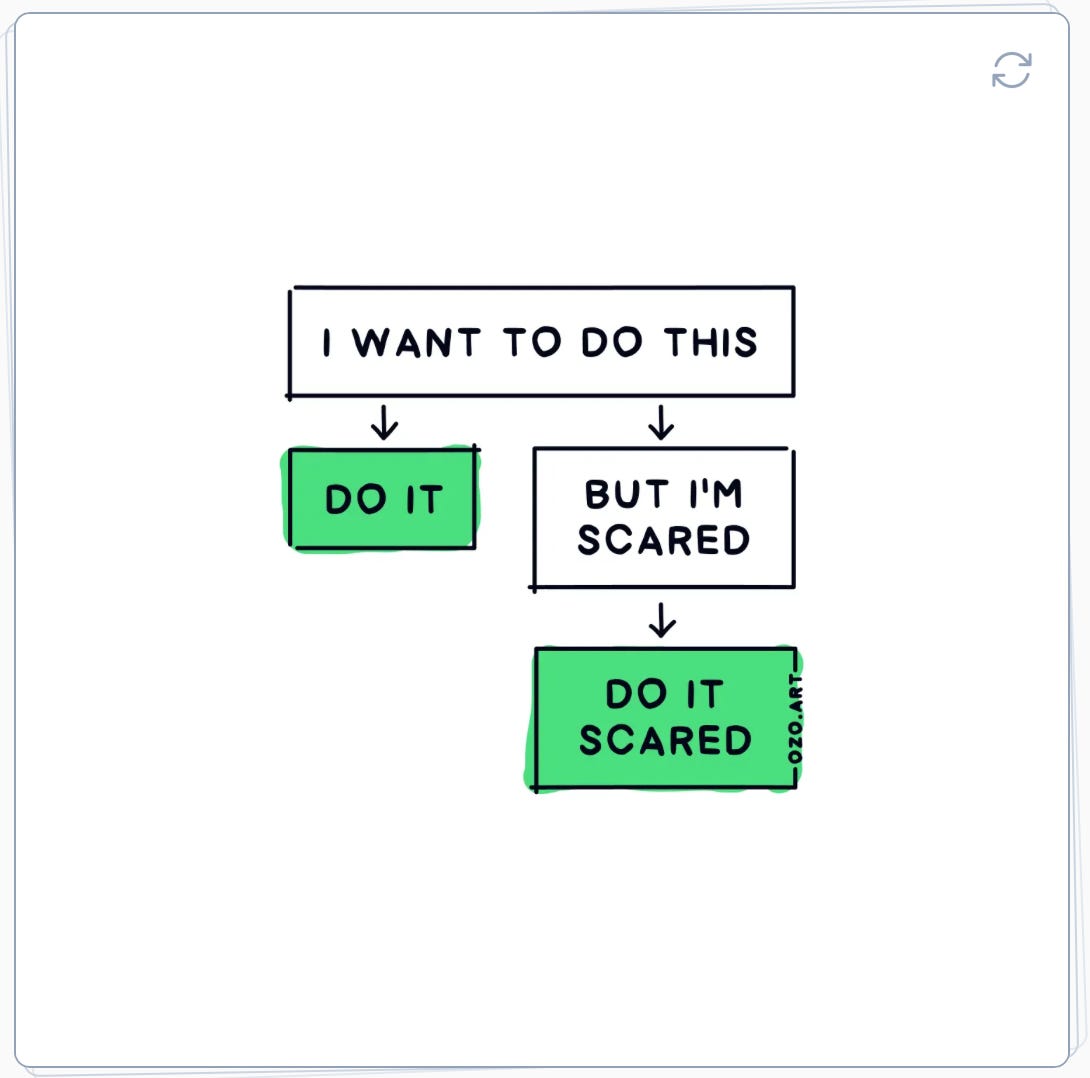
Visual by Janis Ozolins
3 Be there when people need you.
Seriously, even when you’re tired, stretched thin, and you want to just opt out. There have been times in my life when I was not there for certain people, and I regret it (sidenote: I don’t agree with the “don’t live with regrets” mantra. If I have a regret, it means I wish I did something differently which means I’m learning and developing). This applies just as much at work. If I see someone on my team going through something personally, I meet them with empathy. If I see someone struggling professionally, I meet them again with empathy, then help them through their challenge. We tell our teams to be empathetic to customers, but first, we need to be empathetic to our coworkers. I have seen so many leaders lead with zero empathy, and frankly, it makes for an inhumane culture and one most people don’t want to work in.
4 Move your body.
I learned this much later in life than I would have liked. In the past, I often treated my body like a machine, going at 100 mph at all times. First work and everything else in life, second health. Spoiler alert, I got that order wrong. It took me 44 years to learn that lesson.
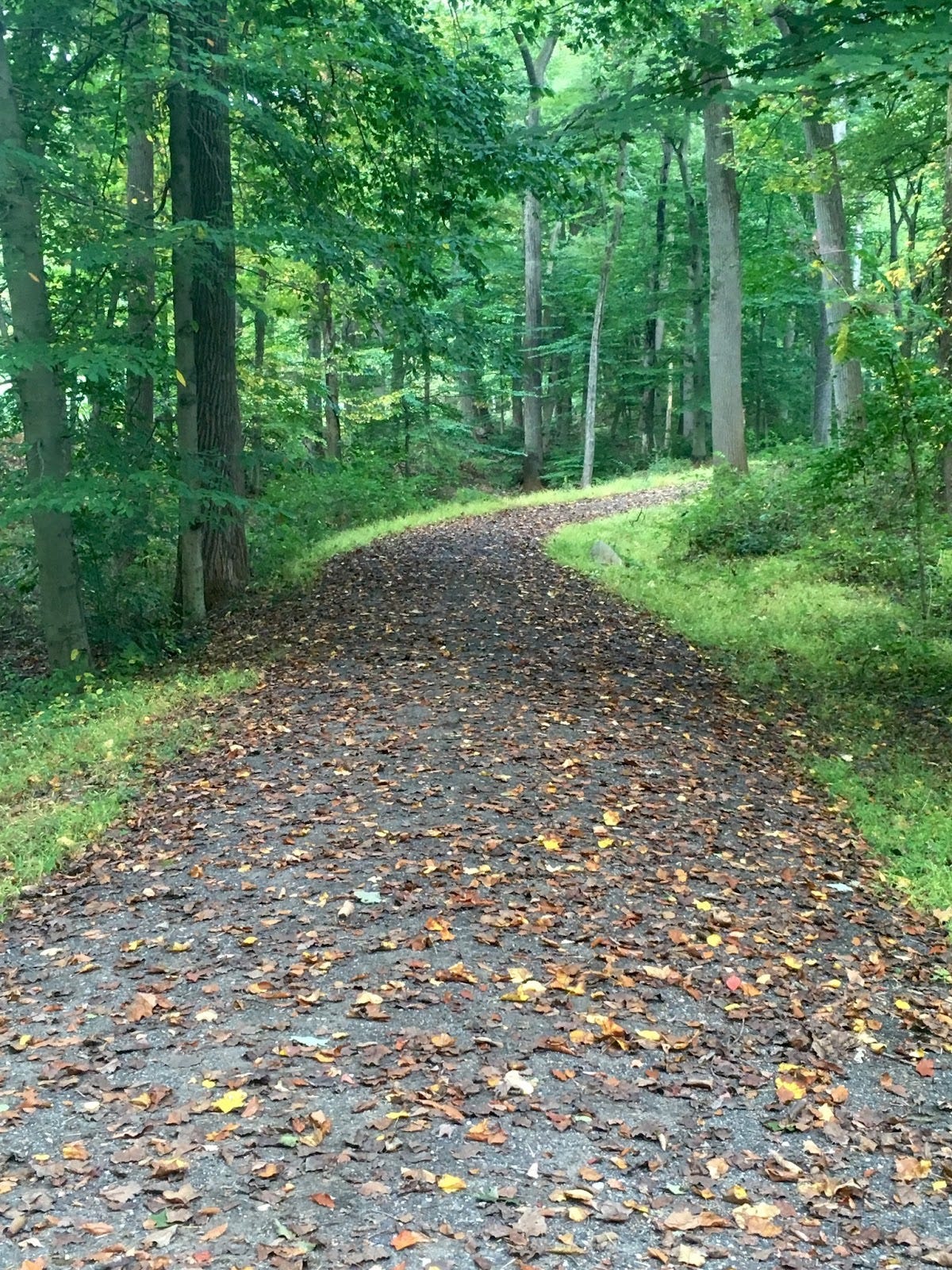
Now, I take the walk in the woods, I go for the run. I take care of my health. We only get one body (pretty sure AI won’t change that, well, at least not anytime soon).
A few years ago, I started running, and not only do I see the obvious health benefits, I cope better with stress, and am more patient at work.
5 I try to never say no to a coffee when someone invites me for one.
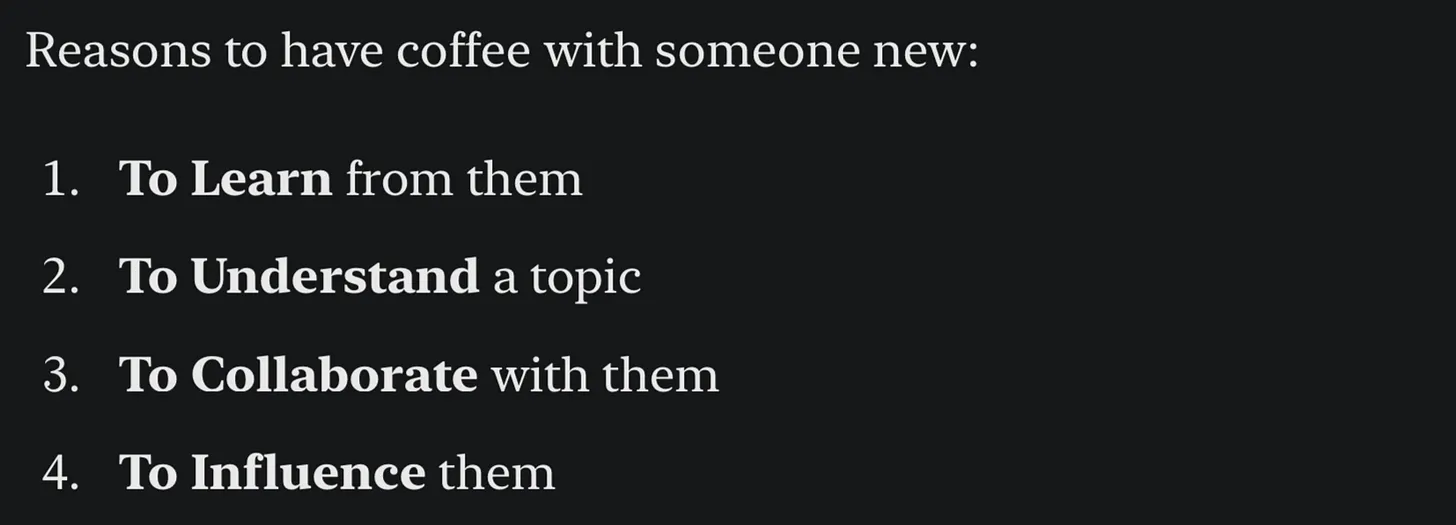
If you know me, you know I love coffee. It is naturally easy for me to say “absolutely - I’ll go get a coffee with you.” Over the hundreds of coffee meetings I’ve had, I learned that this is where we forge connections and understand others on a deeper level. Maybe you are thinking I’m overstating the benefit of this, but great stuff has come out of coffee meetings for me.
Andrew Yeung wrote a piece on “The Art of the Coffee Chat” and I love how he articulates why these conversations matter. You can read the full post here.
6 Reliability beats glamor.
Early in my career, I got angry when I wasn’t working on the thing I felt was front and center, the thing everyone wanted to work on, the thing that had the most visibility. As time went by, I started surpassing people who had the front and center role by building a reputation for reliably getting things done, regardless of the profile of the project. The mindset shift (which came in my 30’s) was career changing. Employers want to hire people who know how to get stuff done; When I think back to times when this wasn’t my focus, because I was chasing visibility or some other agenda, I rarely saw the type of acceleration I felt like I deserved. Acceleration for me came in building a reputation for getting stuff done.
7 Mentors and coaches are invaluable.
I’ve had mentors and, at times, formal career coaches across most of my career. Having these folks in my life was invaluable for many reasons. They call out the bullshit thinking when necessary, they help you see blind spots, and they bring you back to reality. I’ve surrounded myself with a “Personal Board of Advisors” who I’ve turned to for support along the way.
As a specific example of a problem I turn to them for: I’ve raised / helped raise over $140 million in capital (equity + debt) for the start-ups I’ve been in, and during every cycle, mentors have been a lynch pin in the process. Allowing me to see where the pitch story goes wrong, where I was unprepared, when I was floating on Mars, and had to return to Earth with my financial projections. They have helped assess deal terms, make integral connections, and have at times made me realize I needed a break before the dangerous type of burnout settled in.
The main lesson my coaches and mentors have reinforced over the years:
Confidence doesn’t mean knowing everything. Ask for help when you need it. Admit when you don’t understand something, when something is confusing or when you need another opinion. Having a group of people you can trust and turn to is incredibly freeing.
8 Sleep is everything
At one point in my past, I tried to be the person who didn’t need sleep. I tried to wear it like a badge. I would talk about how I didn’t need sleep to function. I see others do the same, like it’s a status symbol. This didn’t work for me. Everyone needs sleep, and I get the sleep I need to be productive.
Back when I was at Experian, I worked on a big project that had me flying to London somewhat often. I would take red-eye flights (flights that take off at 10 pm and land at 6 am) and then go right into work for a full day. The only problem: I don’t sleep on flights. I have never been able to. At first, I powered through these red-eye flights, but eventually, they took a toll on me. I started to see changes to my attitude, my work performance, my health, and my outlook on everything.
These days, I try to get 7 - 8 hours of sleep a night, and I am so much more productive and happy. I track my sleep on a Withings Watch, and it yells at me when I start to deprioritize my sleep. I get much more done when I have a great night of sleep. Rest is as important as work.
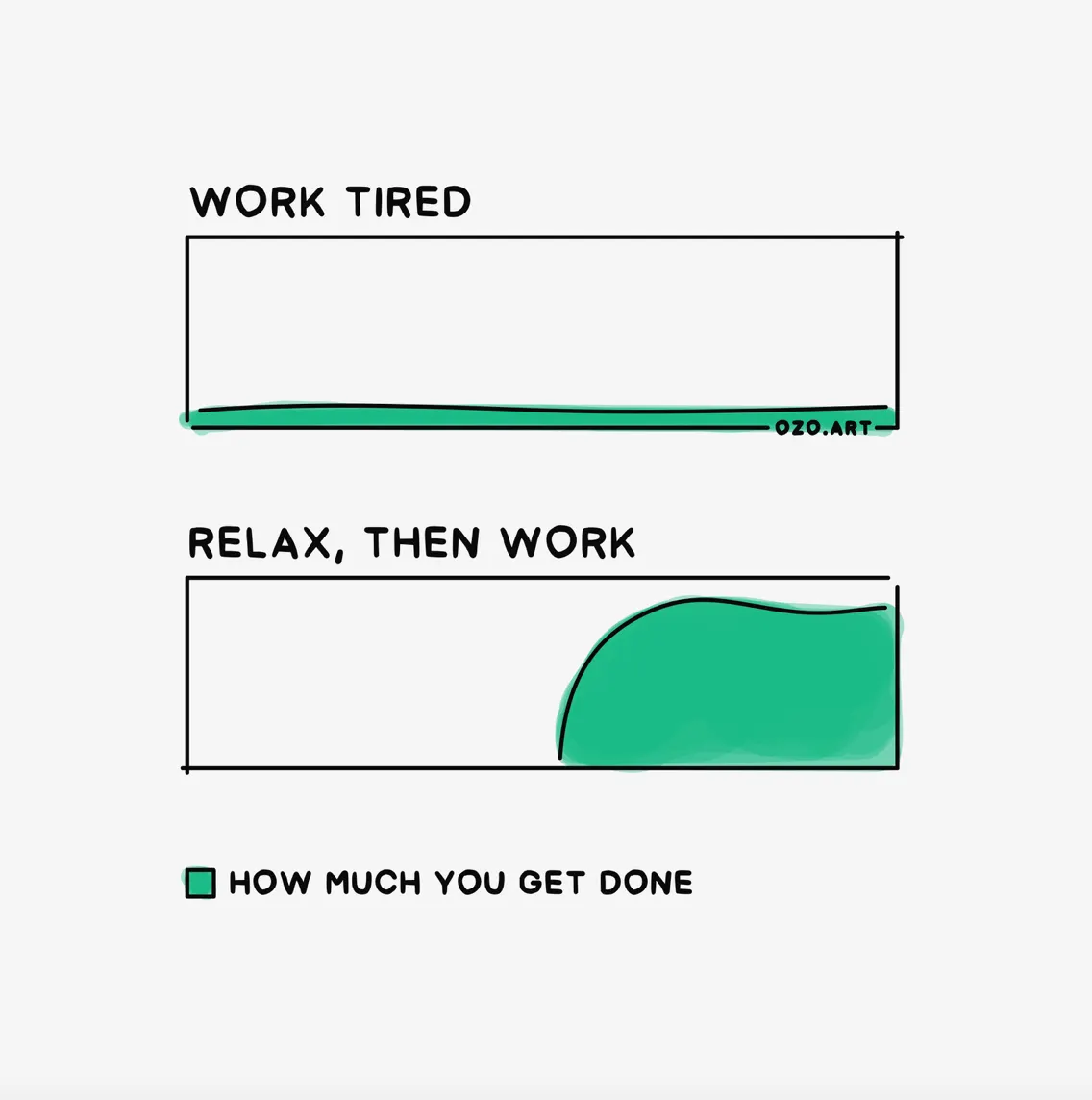
Visual credit: Janis Ozolins
9 When you’re in a leadership role, you’re always being observed.
I find it’s easy to overlook this when you’re in the daily grind but it’s always true. I don’t think I started to really understand this until I started to work at Breather.
I joined Breather as head of Finance and after some time, my role expanded wider over other groups. Breather was my first VC (Venture Capital) funded business experience. Prior to Breather, I had leadership positions in the hustle of smaller business units funded by larger companies, but VC is very different. I was at Breather during a time when startups grew at any cost and profitability was very far from being even close to a priority. We were after revenue growth. Breather had a very high profile at the time. The two co-founders were brilliant and introduced space-as-a-service in hourly increments. When I started, the business was making roughly $80,000 a month and when I left just under 3.5 years later, we grew revenue to nearly $3 million a month. A great high growth story and a fantastic team I was able to dig in with.
As Breather started to accelerate, every move by the leadership team was being scrutinized, by both our internal teams and by our high profile investors; How we spoke, how we acted in and out of meetings, how we acted at happy hours, even how we dressed. One day, someone came up to me and told me I needed to dress cooler. The entire Breather experience taught me: when you’re in a leadership role, people are always taking notes, even on the things you think don’t matter.
This past summer, my wife and I attended the Coldplay concert at Gillette Stadium. First, it was quite a show and if you haven’t seen Coldplay live, I suggest you experience it once in your life. Second, we all know how it reinforces this lesson.

10 Transparency is everything.
When people don’t understand why things are done the way they are, they fill in the gaps with a story that may or may not be true. This lesson has fundamentally shaped how I communicate inside organizations.
People don’t get frustrated with bad news per se; they get frustrated with surprises. The product manager who suddenly gets a complete change in product direction two weeks after what was already communicated. The investor who thought revenue would hit $20 million for the year, but revenue hit $19 million. Employees who thought the company was doing well suddenly see layoffs of 50 people. Surprises don’t help anyone, especially when they happen over and over again. Surprises erode psychological safety; they destabilize individuals, and they destabilize organizations.
At the Muse, we had our fair share of surprises. Some were unavoidable, like needing to pivot from an on-site video product to a remote video product because of COVID, but many were not. We ran All-Hands meetings every two weeks for the last four years of my Muse tenure; it was our way of bringing people together in a fully remote environment where we could talk about the business and have a little fun. Those meetings were critical for transparent communication, and when we didn’t hit the mark, our employees quickly let us know.
During one All-Hands a few years ago, I took the team through the full annual budget deck we were ultimately presenting to the board. It included full financial statements, how cost was going to be allocated across the year, where we had room in the budget for things not going to plan and what we were nervous about. It was an hour long presentation and afterwards, my slack direct messages lit up. One employee said: “I’ve never been at an organization with so much transparency, it makes me feel great and it fuels me to work hard.”
Transparency leads to trust over the long-term.
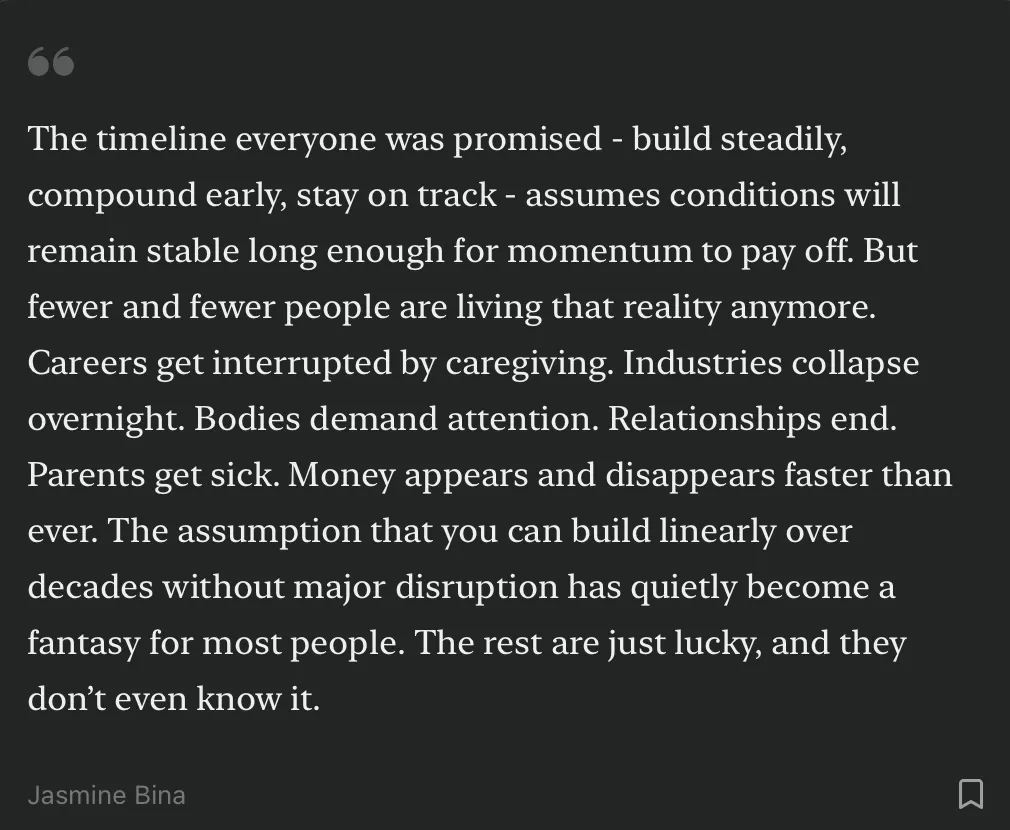
11 Most careers are not linear.
I wrote about this extensively in my first Revive post back in December. We start our careers thinking they will follow a neat, well-paved path, but instead, we hit blind curves, switchbacks, rocky terrain, and other unexpected obstacles. I saw this quote the other day, and I think it perfectly sums up what a lot of us experience.
I share this list not as rules that are applicable in every situation, more as lessons I’ve seen repeated over and over again, some learned the easy way and some the hard way.
Thanks for reading and have a great week!
Dave